

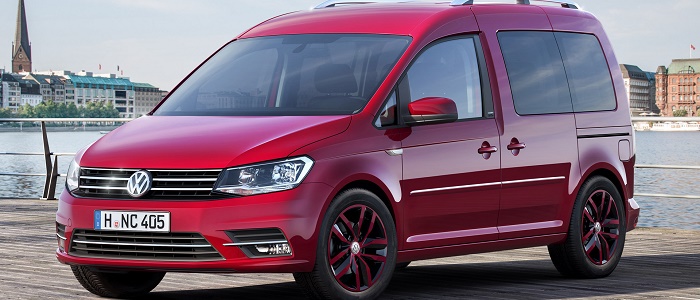


Volkswagen Caddy Combi 2.0 TDI BlueMotion ...
Model Year 2015, M - Segment (MPV)

drivers'

3.0

rating

Badges:
MPV
MPV
x 5
x 5
Front
Front
2.0 L4 16v
Turbo
Turbo
Diesel
Diesel

Basic info on Volkswagen Caddy Combi 2.0 TDI BlueMotion ...

The German car was first shown in year 2015 and powered by a 4 - cylinder turbo diesel unit, produced by Volkswagen. The engine offers a displacement of 2.0 litre matched to a front wheel drive system and a manual gearbox with 5 or a dual clutch gearbox with 6 gears. Vehicle in question is a mpv with the top speed of 172km/h, reaching the 100km/h (62mph) mark in 12.0s and consuming around 4.3 liters of fuel every 100 kilometers.

Data

Engine info ( issues & breakdowns )
Volkswagen

2.0 TDI CUUD

displacement:
1968
cc
configuration:
4 - Inline
 
valves:
16, 4 p/ cylinder
 
aspiration:
Turbo
 
fuel type:
Diesel
 
power:
102
hp
torque:
250
Nm
Vehicle information - Volkswagen Caddy
~70% score
produced:
2015. - 2020.
 
body style:
MPV
5 door
length:
4406
mm
width:
1794
mm
height:
1856
mm
boot:
560 - 2239
l
fuel tank:
60
l

Check vehicle history

Performance

Manual gearbox performance

emission

B

category

manual gearbox

5 gears

average

4.3

l/100km

weight:
1360
kg
acc. 0-100 km/h:
12.0
s
top speed:
172
km/h
cons. (urban):
5.2
l/100km
cons. (highway):
3.8
l/100km
cons. (average):
4.3
l/100km
CO2 emissions:
114
g/km
Automatic gearbox performance

emission

C

category

dual clutch

6 gears

average

5.1

l/100km

weight:
1433
kg
acc. 0-100 km/h:
12.1
s
top speed:
171
km/h
cons. (urban):
6.3
l/100km
cons. (highway):
4.5
l/100km
cons. (average):
5.1
l/100km
CO2 emissions:
135
g/km

Latest vehicles added by our users

There are currently no such vehicles in our community

Pros & Cons compared to direct rivals

safety
performance
economy
boot space

Safety results for Volkswagen Caddy

EuroNCAP: ~70% occupant safety

Other cars that might interest you...
produced from 2012. to 2015.  
EuroNCAP: 56% score

acceleration

16%

slower

consumption

9%

higher

power

11%

lower

length

=

equal

weight

3%

higher

fuel tank

=

equal

boot

17%

larger

boot ext.

25%

larger

price

85%

lower

produced from 2015. to 2022.  
EuroNCAP: 75% score

acceleration

6%

faster

consumption

25%

higher

power

25%

higher

length

=

equal

weight

5%

higher

fuel tank

=

equal

boot

29%

larger

boot ext.

30%

larger

price

75%

lower

produced from 2012. to 2021.  
EuroNCAP: 79% score

acceleration

10%

slower

consumption

2%

higher

power

7%

higher

length

2%

shorter

weight

8%

higher

fuel tank

=

equal

boot

18%

larger

boot ext.

25%

larger

price

35%

lower

produced from 2017. to 2021.  
EuroNCAP: not tested

acceleration

4%

slower

consumption

22%

higher

power

7%

lower

length

1%

shorter

weight

=

equal

fuel tank

20%

smaller

boot

30%

larger

boot ext.

25%

larger

price

43%

lower

produced from 2015. to 2018.  
EuroNCAP: 56% score

acceleration

16%

slower

consumption

17%

higher

power

13%

lower

length

=

equal

weight

5%

higher

fuel tank

=

equal

boot

17%

larger

boot ext.

25%

larger

price

30%

lower

Visitor comments


NOTE: Fields marked with an asterisk (*) are mandatory. By sending a comment you confirm that you have read and agreed to our terms & conditions.


log in so that your comment is published immediately
No comments at this time. Be the first one to write a comment.

Ok, this is cool, now what

Follow us

AutoManiac Instagram

AutoManiac Facebook

AutoManiac database currently covers:

49worldwide automotive brands
1.661different vehicle models
2.384engines
14.865specific cars